
14 October 2020
8+ reasons why not to buy a property (yet)
In today's article you will learn more about why you should not yet consider buying your own property. In this publication, our real-estate agency also compares the options of renting and buying, as well as the current conditions for obtaining a mortgage. Dive into some engaging reading with us and, if needed, do not hesitate to contact us right away.

In today's article we will reveal several reasons why you (still) are not ready to buy a property, or why you should not decide to own a space.
You should not buy a property out of obligation or a feeling that "you already have to/you should already". You need to determine your financial goals and define what results you expect from the step. Most of us rely on the fact that renting a space is a loss of money and for that reason we turn to the option of buying.
However, it is not that simple.
Even though we want to get the most out of the opportunity, when buying a property we must factor in the costs of housing and of paying for possible renovations or reconstruction. Buying a property also significantly affects a person's standard of living and financial outcomes. Another fact is that you need to be firm in selecting which types of properties are worth buying and which, on the contrary, not to invest in.

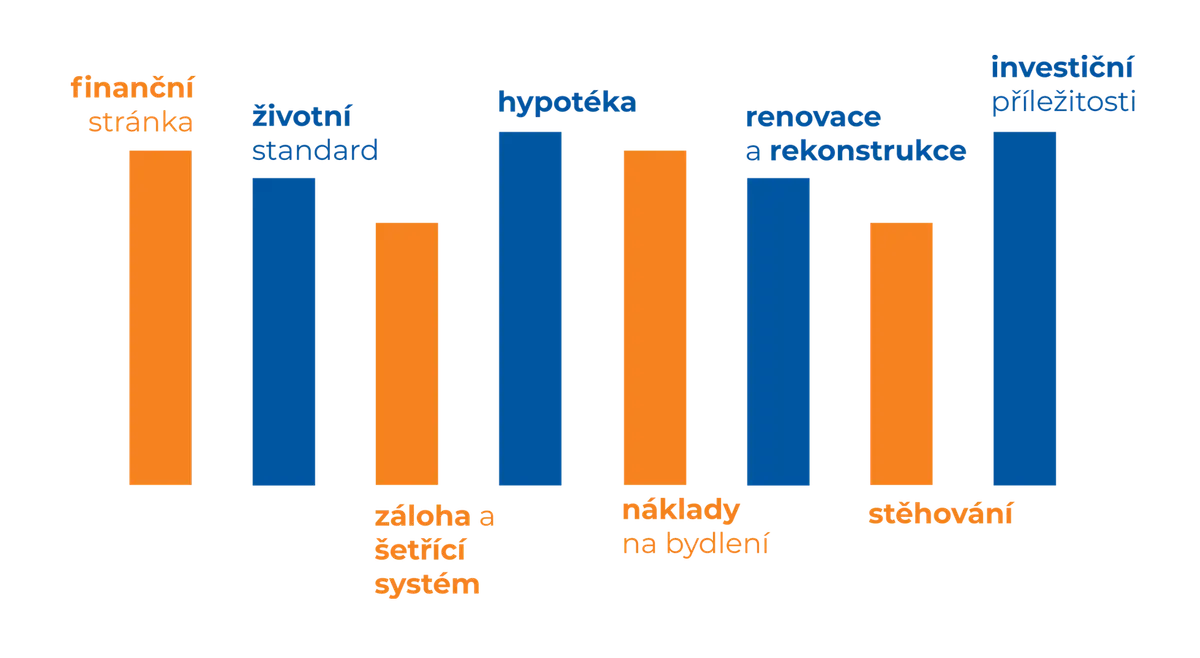
As a property owner, it is difficult to manage cash flow – given that you are almost constantly investing. Buying is associated with more unforeseeable costs and payment for all the equipment present or the overall physical structure of the space.
Your fate is sealed in maintenance, repairs and improvements.
On the other hand, if you have a stable flow of finances, savings (which you have not drawn on for years), a saving system, and the space and time to buy a property = this choice is _the right one_ for you. As mentioned in the introduction to this publication, you need to know your own material goals and ultimately also your goals in life.
That is precisely what affects the passage and the course of all your days, weeks, months and years.

The average market return and inflation. These percentages are decisive.
With investing you have much more control, because you can choose the right asset allocation, diversification and tax strategies together with regular investment contributions, in order to maximise your wealth in the long term.
Where there is a property purchase, there is enormous responsibility. Flexibility may (or may not) be limited – it all depends on the goals set, your approach and on where we want to see ourselves in 5-10 years. What is your financial situation, what will it be, what are you planning and/or are you interested in moving in a few years? The correctness of the decision to buy a space depends on these life decisions.
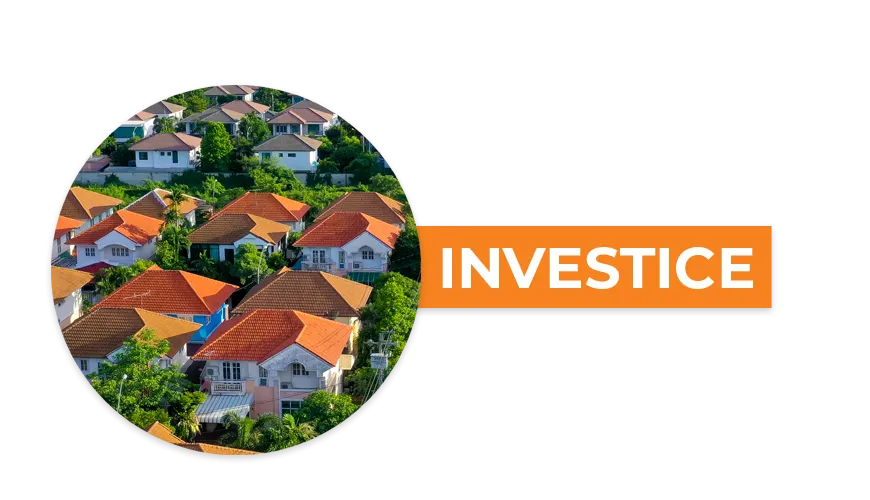
One of the main ways investors can make money from property is to become a landlord.
Real-estate investment groups are a more practical way to make money. Trusts for investing in real estate are essentially stocks that pay dividends.
Owning rental properties can be a great opportunity for individuals who have DIY skills, renovation skills + the patience to manage tenants. However, this strategy requires considerable capital to finance initial maintenance costs and to cover vacant months.

Because you own the property, you can prosper over time thanks to an increase in its value (as a result of changing demand in the area), even if the property undergoes no changes.
This will obviously vary, because it depends heavily on the area where your rental property "stands". In some areas the value may rise significantly over several years, while in others it may stay the same.
Ideally, this growth in value keeps pace with at least inflation.
If you are in an above-average area, you may find that you can beat inflation; on the other hand, a truly stagnant area may not keep up with inflation.

Strong arguments in favour of buying are usually:
- When you pay off your home, it is yours.
- Once you have paid off the cost of housing, you eliminate it.
- If the house "appreciates" over time by more than what you have paid in mortgage, interest, taxes and maintenance, you have made a return.
_This is the increase in the value of a house over time. It depends on the local property market and on improvements made to the property.
The appraisal is calculated on the basis of the fair market value of comparable houses for sale in the neighbourhood._
- Tax credits help offset part of the costs of owning a home.
Solid arguments in favour of renting:
- You own your home, but you pay quite a lot in interest and taxes. Renting does not throw money away, and you get housing.
- You do not have to pay for repairs, maintenance or other problems that may arise.
_What matters is how you view your refuge - whether you are buying it to get a home or directly as an investment._
It is also necessary to identify:
- How long you will/want to stay in the property (maintenance costs are spread over time,
so the longer you live in the apartment or house, the better.).
- The cost of housing in the given area (if renting in a particular area is too expensive
and has no prospects, buying your own home will probably be the better decision for you.).
- Opportunity costs (taxes and insurance): What kind of long-term return can be achieved? Define what is best for you.
- Down payment: What return could you make if you invested a lump sum of money?

1. Minimum age – i.e. 18 years. 2. Regular income = the ability to repay the mortgage. Its amount must not exceed 50% of net income. You must prove your income, and the more you want to borrow, the more funds you must have. 3. Creditworthiness – a bank assessment examining your other loans, liabilities, overdraft, credit cards, etc. 4. Records in the debtor register – if you want a mortgage, you must not have any debts. However, if the missteps are minor, the lender may give you a chance, but expect a higher interest rate. 5. Collateral: You can usually pledge several properties, and you should expect further fees such as: property acquisition tax, commission, notary or lawyer fees (At our real-estate agency, you can get lawyer services already included in the price of the property). 6. Residence in the Czech Republic: At least temporary residence, ideally permanent residence.