
23 June 2021
Property valuation 101: who carries out the valuation, methods, mistakes in property valuation, documentation, what affects the price of a property
Who carries out the valuation? Which valuation do you need to choose and for what purpose? What is taken into account when valuing a property? Find out everything with us.


Karel Štaubert — managing director of K&Š MAXXUS REALITY, s.r.o. and certified property valuer. · Updated 16. 9. 2026.
Property valuation is a process that determines the economic value of an investment in real estate. The valuation is carried out by a specialist with the necessary certification. The method and the valuer are determined by the lender. Preparing a valuation usually takes up to two weeks, depending on the technique chosen and, of course, the documents supplied. The need for this documentation arises in several areas – e.g. financing, sale statements, investment analyses, property insurance, taxes or a mortgage. A lien also plays a role here, because it applies in case the debtor is unable to repay their obligations on time. Enforcement proceedings would then follow and the pledged property could be sold, for example, in a public auction. The amount obtained from the sale is then used to settle the claims. Once the mortgage has been repaid, the owner of the property is issued a confirmation of the termination of the lien and the Land Registry carries out the relevant deletion. In the process of obtaining a mortgage loan, a property valuation is a necessity. A mortgage? And what is needed to obtain one?
A mortgage loan is a loan secured by a pledge of property. You can decide to secure it with several properties – so that you receive a loan of the full value of the property (mortgage without a down payment). The larger the down payment, the more favourable the terms are for both the client and the bank. A mortgage represents a lower risk for the bank, and thanks to that it can offer the counterparty solid terms.
A purpose-bound mortgage is used for:
- purchase of a house or apartment (purpose: housing);
- purchase of a house or apartment (purpose: letting);
- building a house;
- renovation of a house or residential space;
- reimbursement of money (investment in the purchase, construction or renovation of a property);
- refinancing of a mortgage loan;
- property settlement;
By contrast, a non-purpose-bound mortgage loan is known as an American mortgage. You can use the money obtained for practically anything, which is the main advantage of a loan without a specified purpose. It does come with a somewhat higher interest rate than a classic mortgage, but the "American" one is at the same time more favourable than typical consumer loans.
Typical conditions for obtaining a mortgage include, for example:
- proof of income;
- sufficient value of the collateral;
- sufficient creditworthiness (income and expenses);
- a good credit history;
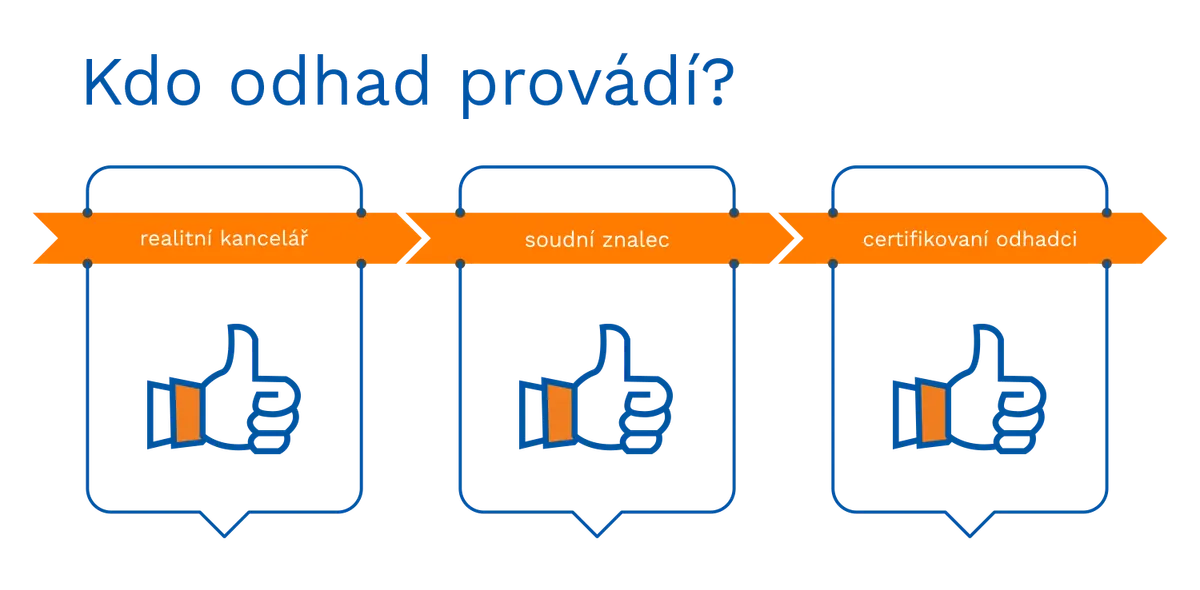
Professionals in the field will always be glad to provide you with services that combine quality and comprehensiveness. However, what are the details behind the individual valuations? Prices are important and always will be. It is necessary to distinguish which valuation you need to have prepared, by whom and why:
- Bank valuation: The bank needs to determine whether the financed property is suitable for the loan and whether the purchase price is not higher than the valuation price. The valuation then serves as a basis for approving the mortgage loan and also affects the interest rate (prepared by the bank's valuer);
- Expert valuation: Used for tax offices (to determine the amount of tax on the acquisition of a property), for the property settlement of a married couple in a divorce, or for enforcement proceedings, insolvency proceedings and debt relief (prepared by a court-appointed expert);
- Market valuation: Comparing a specific property with properties in the surrounding area and determining the real market price (a market valuation of a property is useful when you want to sell a property but have no clear idea of what price would be realistic (this type of valuation is usually prepared by a real-estate agency);
Reports differ in scope and in the price of preparation. A physical viewing of the property is a prerequisite for preparing a valuation.
MAXXUS REALITY offers a qualified market valuation of your property. If you decide to sell your apartment or house with us, the valuation is completely free.
We handle all of the following purposes:
- inheritance proceedings
- property settlement
- divorce proceedings
- court settlement of property
- restitution proceedings
- enforcement proceedings
- purchase and sale of a property
What types of property do we value?
- family house
- recreational property (cottage/country house)
- residential and non-residential premises
- halls, garages, commercial premises
- land
[

](/odhady)

The purchase price of a property is stated in the purchase agreement and is the official amount for which the property was actually bought. It does not have to be supported by an expert report.
A market valuation is an estimate of the financial range within which a property will (most likely) also be sold. It is used, for example, in inheritance proceedings (division of assets without selling the property = an expected value is determined).
The market price is the final sale amount at the signing of the purchase agreement. In the current Czech real estate market, perhaps more than 80% of properties are bought with a mortgage or another loan. Those who are active on the real estate market have certainly come across the term "lendable value". In practice, the bank confirms to the loan applicant that the usual price (market value) of the property offered as loan collateral is, for example, CZK 8 million, but the loan will be granted in the amount of CZK 7 million. An expert valuation report speaks of how much was built and over what period, whereas a market valuation tells of the real value of the property on the market. The market valuation matters both to the seller and to the bank where the seller wants to arrange a mortgage. It comes close to the real price at which the property has a chance of being sold on the market. It takes into account the prices at which comparable properties in the immediate area are sold, and the current situation on the market. An expert valuation of a building differs from the market price. Matters other than the market valuation are also taken into account. As a result, the final amount may be lower than the market price.


The purpose of the valuation is decisive. The valuer then selects the most suitable method accordingly. The most commonly used approach is the comparative method. It compares the property with several very similar properties that were sold or rented in the immediate vicinity. This is the method that comes closest to the purchase price of the property.
If the above method cannot be used, the valuer will turn to the income method. This calculates the price of the property on the basis of the income it is able to generate. This method is mainly applicable to rentals and to investors interested in buying a property for the purpose of further letting.
The last method the valuer may use is the cost method. It involves determining the amount of money for which the construction of the given property could be carried out. Unfortunately, it is the least accurate – it does not reflect the local real-estate market.

The most common mistakes when determining the sale price of a property include:
- Following advertisements and the prices at which properties are offered (the stated amounts do not correspond to the real amount for which the property is ultimately sold);
- The cost method, mentioned above, is not always the right choice. Sometimes it simply does not work. The market price may well be higher than your own investment in the property. If the location of the property becomes problematic, the market price will be lower than your investment. Buyers are interested in the usable value, which they compare with the prices of other properties on the market.
- Price maps. A price map or land price map presents the average price in a given area (location). Unfortunately, it does not take into account the technical condition of the property (e.g. the apartment and the building in which it is located), the orientation of the windows, the layout of the individual rooms, the floor, the lift, the social amenities of the surroundings, the relevant transport accessibility, etc. These are minor details, yet they have a major influence on the price.
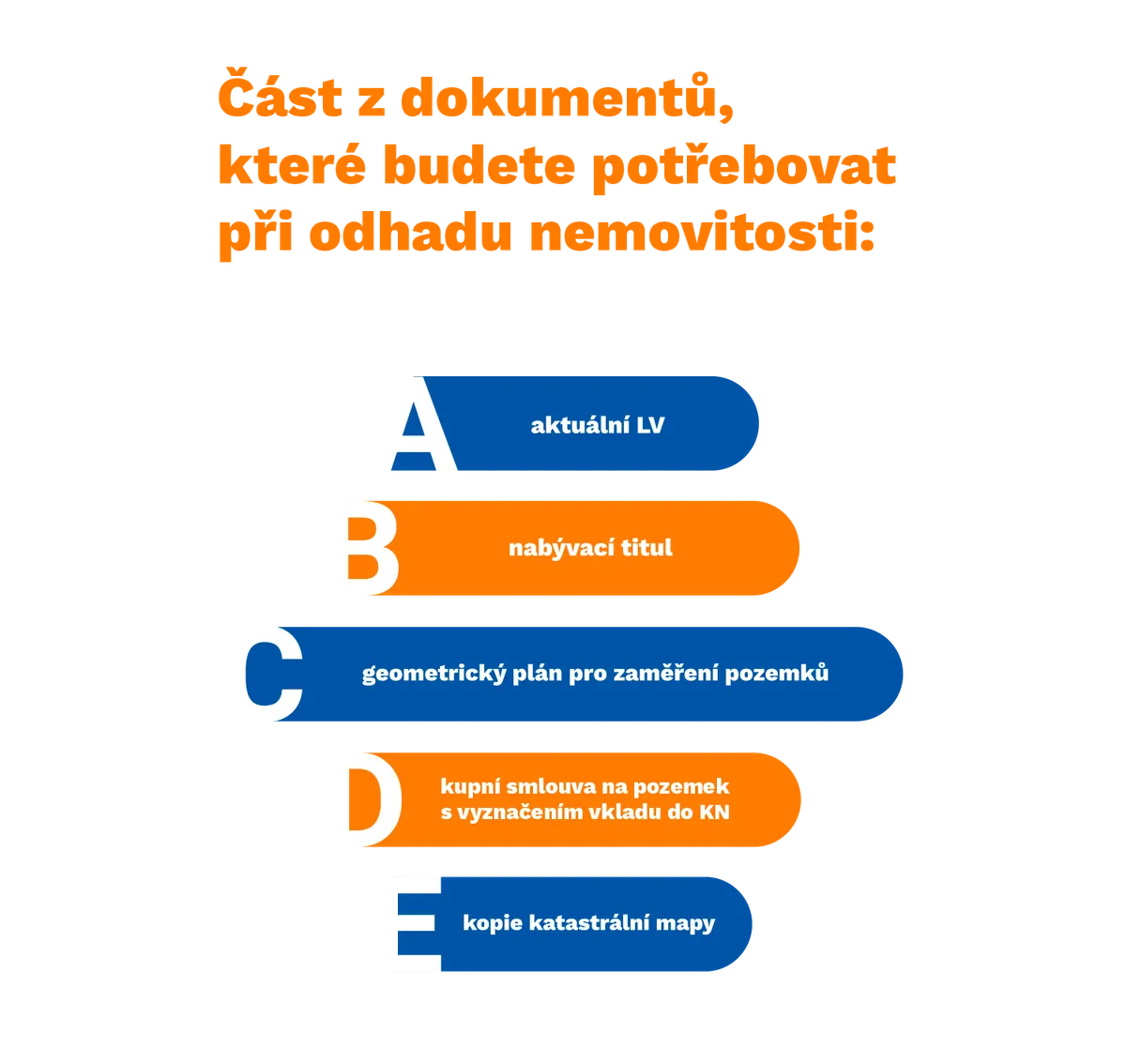
And this is only an excerpt. For an apartment or a non-residential unit, you usually need:
- an LV extract from the Land Registry (Cadastre) (no older than 3 months);
- a copy of the cadastral map (no older than 1 year);
- a zoning decision or a verified information on the possible use of the land;
- a building permit;
- a purchase agreement for the land, with the registration of the entry in the Land Registry noted or an agreement on a future purchase agreement;
- contractual documents on the establishment of an easement, a pledge agreement, etc.;
- information on utility networks in the vicinity of the land + connection options (water supply, sewerage, remote property security, cesspit, septic tank, domestic wastewater treatment plant, heat pump, etc.);
As for family houses, you will usually need:
- an LV extract from the Land Registry (Cadastre) (no older than 3 months);
- a copy of the cadastral map (no older than 1 year);
- a zoning decision or a verified information on the possible use of the land;
- a building permit;
- contractual documents on the establishment of an easement, a pledge agreement, etc.;
- information on utility networks in the vicinity of the land + connection options (water supply, sewerage, remote property security, cesspit, septic tank, domestic wastewater treatment plant, heat pump, etc.);
- a occupancy permit (kolaudační rozhodnutí) marked as final and legally binding;
- design documentation for the building permit (certified by the building authority, or as-built documentation);
- purchase agreements (for the whole property, for the plot of land, etc.);
- contracts for work (if the building is constructed by a construction company);
[

](/odhady)
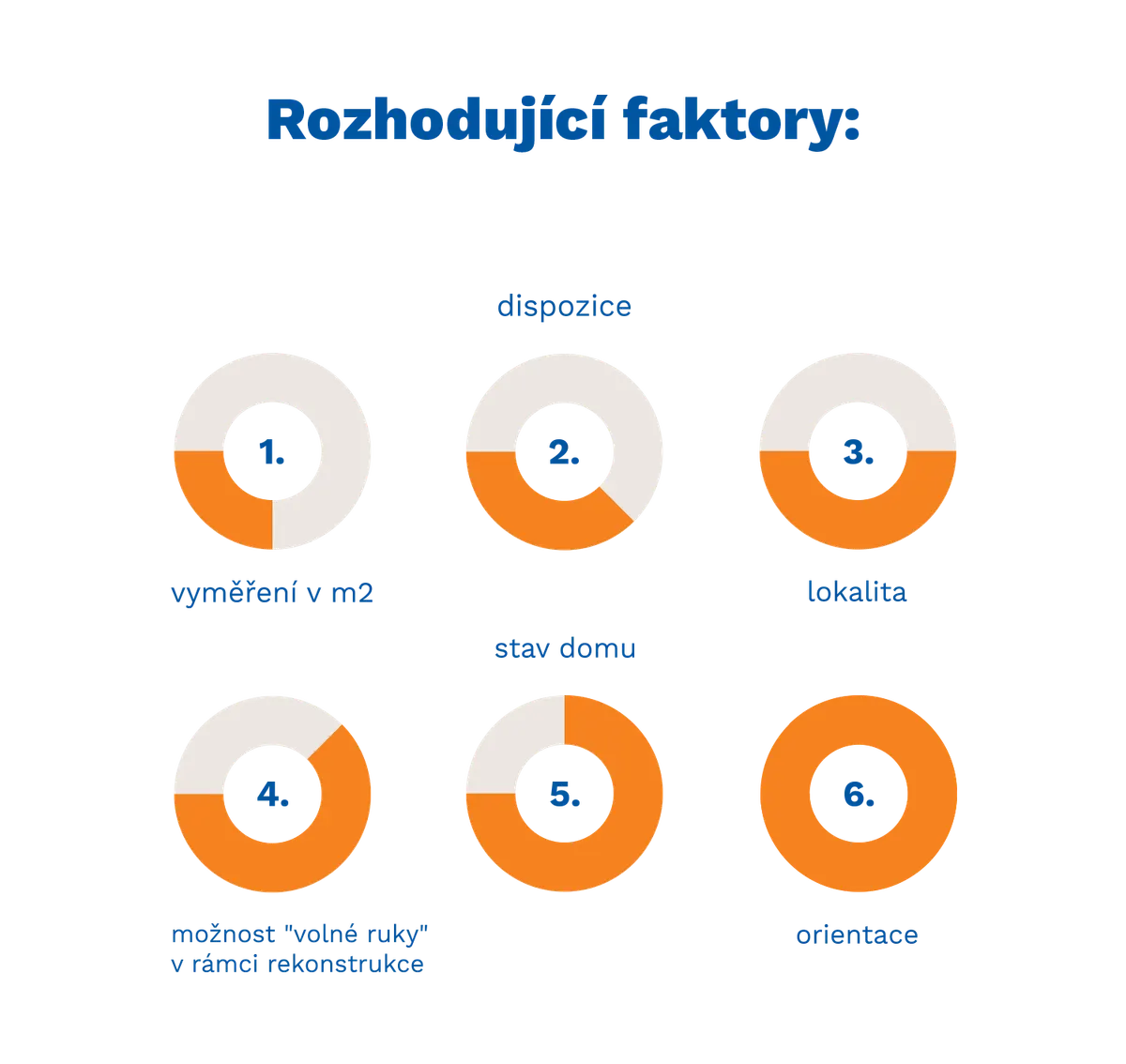
Other important factors include:
- ceiling height (in smaller apartments, higher ceilings can increase the price)
- condition of the space (just as the condition of the building itself matters, so does the interior of the residential or non-residential unit in that building = it is generally recommended to remedy defects and implement home staging – but beware of a complete renovation, as prospective buyers will end up furnishing the apartment to their own taste anyway (this could mean unnecessary expense for you);
- current market situation (prices depend on current demand and supply = it is necessary to take into account the individual factors that have a major influence on property prices and, where appropriate, to work with the current preferences of clients);

Decide wisely and according to your needs. Always choose the valuation that will fully serve its intended purpose.
[
](/odhady)